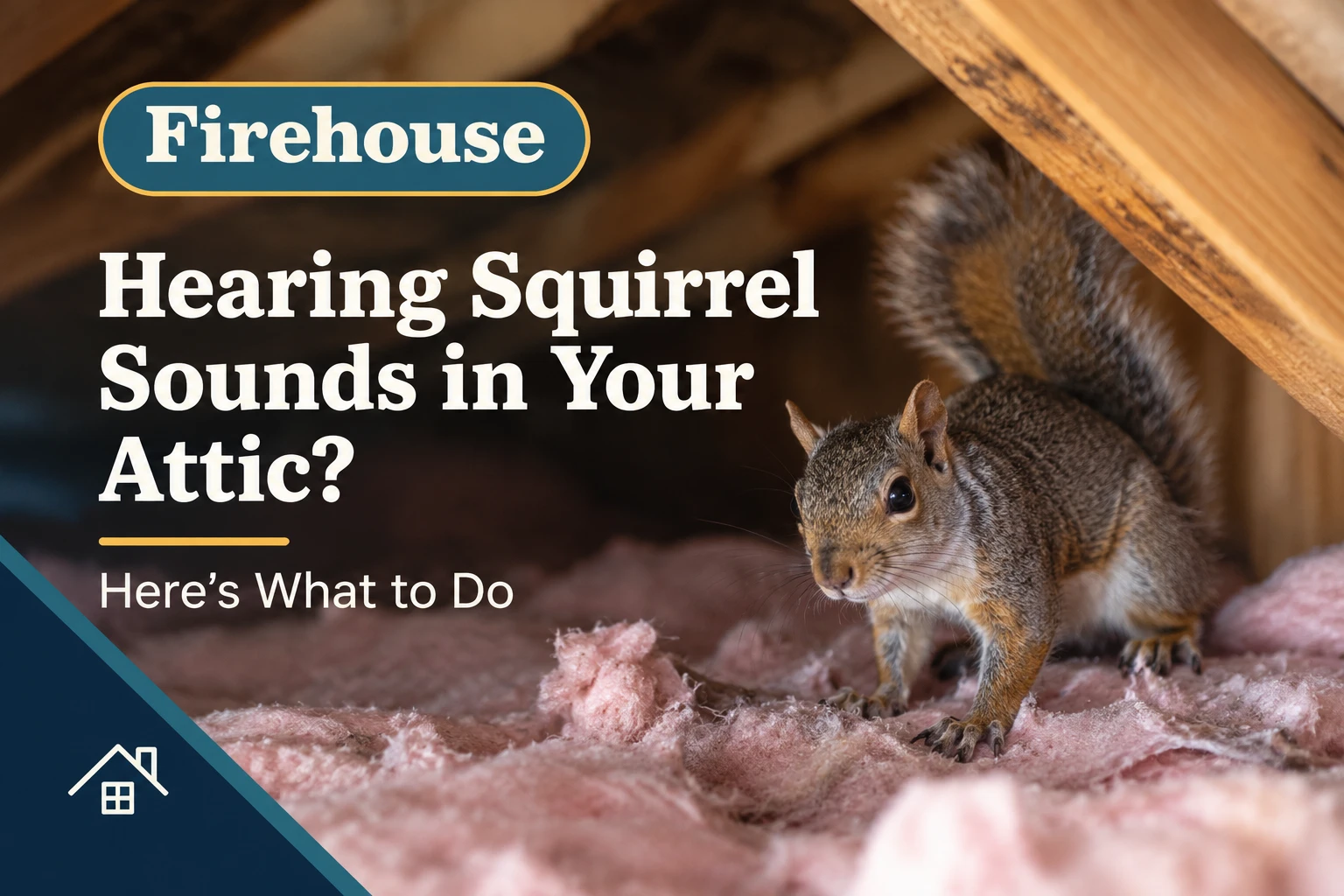
Hearing scratching, scurrying, or thumping sounds above your ceiling? Those noises could mean squirrels or other wildlife have found their way into your attic. While it may seem like a minor nuisance at first, unwanted visitors can damage roofing materials, disturb insulation, and create problems that become more expensive to address over time.
If you suspect something is living in your attic, understanding what to look for can help you determine the next steps to protect your home.
How Do Squirrels Get Into Your Attic?
Squirrels are skilled climbers and can find their way through small openings around your roofline. Common entry points include:
- Gaps around roof vents and soffits
- Openings around pipes and other roof penetrations
- Separated flashing or deteriorating sealant
- Gaps along roof edges and attic framing
Once they find an opening, squirrels may return repeatedly or establish a nesting area inside your attic. Scratching, scurrying, chewing sounds, or disturbed insulation can all be signs that something needs a closer look.
Why Attic Insulation Matters
One of the biggest concerns with wildlife in your attic is the damage it can cause to insulation.
Squirrels may pull insulation apart to build nests, compress it as they move around, and leave behind urine and droppings that contaminate the material. Damaged or contaminated insulation may not perform as effectively, making it harder for your home to maintain comfortable temperatures.
Depending on the extent of the damage, sections of insulation may need to be repaired or replaced. Addressing potential entry points and evaluating the condition of your insulation can help you understand the full scope of the problem.
What Should You Do If You Hear Something in Your Attic?
If you suspect wildlife has entered your attic, avoid disturbing the animal or attempting to handle it yourself. Instead, consider these steps:
- Look for signs from a safe distance. Check for visible gaps around the roofline, damaged soffits, or other obvious openings from outside your home.
- Pay attention to insulation damage. If you notice unusual odors, disturbed insulation, or signs of nesting, the attic may need a professional assessment.
- Have potential entry points inspected. Identifying how wildlife is getting inside is an important step toward preventing future access.
- Address wildlife before sealing openings. If an animal is currently living in the attic, contact a licensed pest control professional to have it removed before entry points are closed.
How Firehouse Roofing Can Help Protect Your Attic
Once any wildlife has been removed, addressing the openings it used to enter can help reduce the chance of another unwanted visit.
Firehouse Roofing offers attic sealing and insulation services to help homeowners address these concerns. Our Attic Seal Service includes a free initial inspection to identify vulnerable openings around the attic and roofline. We can also assess insulation needs when damage or insufficient coverage is a concern.
For $299, Firehouse Roofing will seal up to 6 entry points through our Attic Seal Service.
Learn more about our Attic Seal Service or explore our attic services.
Protect Your Home From the Top Down
Unusual noises in your attic shouldn’t be ignored. They may be an early warning sign of an opening that needs attention or insulation that has been damaged. Identifying these issues early can help you determine what your home needs before the problem gets worse.
If you’re hearing scratching or scurrying above your ceiling, Firehouse Roofing can help you evaluate your attic’s sealing and insulation needs.
Start with a free initial inspection and learn more about sealing up to 6 entry points for $299.